

Iris, my first experience with an intact female dog, just started her seventh heat cycle, and it’s given me time to reflect on the lessons we’ve learned about predicting and managing her cycle. If you’re navigating this for the first time (or even the second or third!), I hope sharing our experience helps make the journey a little smoother.
Heat Cycle Basics
When a female dog is “in heat” or “in season,” she’s beginning her reproductive cycle. This is typically characterized by bleeding and swelling of the vulva lasting between 2-4 weeks, officially called the proestrus (not-fertile) & estrus (fertile) stages. Heat cycles typically start between 6–18 months of age, depending on the dog’s size and breed, and occur roughly every 6–12 months after that.
Note: In Drents (at least the lines I’m familiar with in the US), we typically see females coming into season for the first time between 8-12 months old and cycling every 6-8 months. Iris first came in season at 11 months old and cycles every 7 months.
Here’s an important difference from humans that many don’t realize: ovulation (estrus) in dogs happens while they’re bleeding—or very shortly after. This means paying attention to when your dog is in season is critical for preventing unplanned litters and being a responsible dog owner.
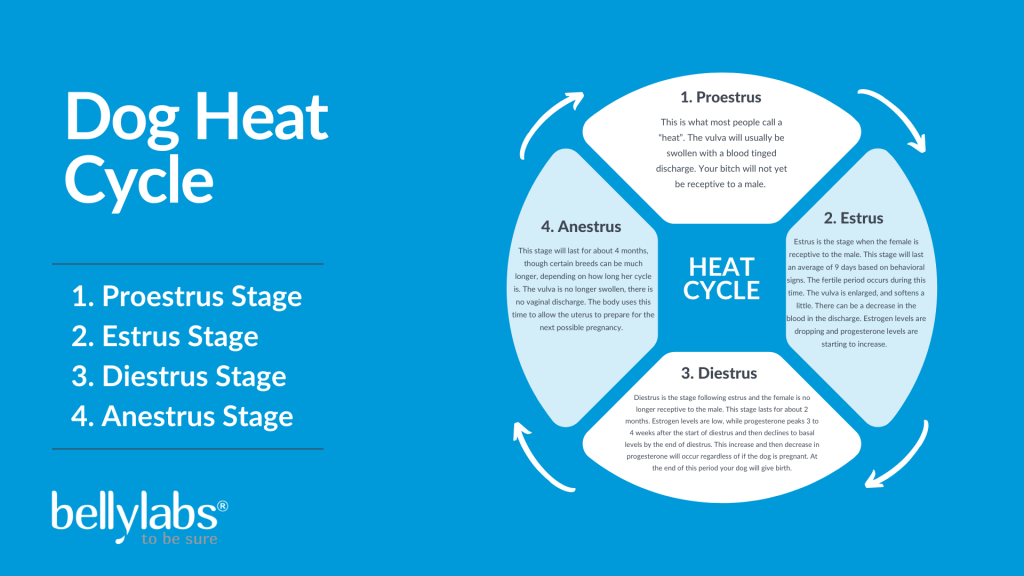
With more people choosing to leave their dogs intact until at least 18–24 months due to health benefits (including joint health), many pet owners will manage one or two heat cycles even if they never plan to breed. So it’s important to learn how to predict when a cycle will start, and how to manage it during.
While every dog is different, in our experience, managing a heat isn’t gross or unpleasant – at most it’s just a bit inconvenient, and a good opportunity to take a break from normal activities and reset.
Predicting Cycles
There are three key ways to anticipate when your dog might come into season:
1. Learn About Her Maternal Line
If you got your dog from a reputable breeder, they’ll likely have useful information about your dog’s dam’s cycle patterns, and maybe even those of the granddams or half-siblings. This can give you a ballpark idea of when to expect her first cycle and how frequently they might occur thereafter.
This insight is especially helpful before her first heat—when you haven’t yet collected enough data or learned what specific signs to look for in your dog.
2. Watch for Physical & Behavioral Changes
This part is a bit more art than science. For Iris, her primary “tell” is swelling around the vulva that starts a week or two before her cycle begins.
Other common signs in dogs include:
- Increased clinginess or restlessness
- Slight behavior changes (grumpiness or playfulness)
- Changes in appetite
- Frequent urination or marking behavior
- Increased licking/grooming of the sanitary area
- Mounting or being mounted more often
Every dog is a little different, so you’ll start recognizing your own dog’s patterns over time.
3. Track Her Cycles
If there’s one thing I am—it’s a spreadsheet girl.
Since Iris’s first heat, I’ve tracked start and end dates of each cycle, and suspected or confirmed (via progesterone testing) ovulation dates. I put this information into a spreadsheet which I can use to determine average time between cycles and standard deviation from that average, which allows me to predict future “windows” where she is most likely to come into season.
This data also helps with everything from timing breedings to knowing when it’s safe for off-leash time or interactions with male dogs again. Over time, I’ve developed a good sense of how often Iris cycles and can predict her next season within a pretty reliable window.

I also take notes on discharge (volume, color, odor, texture) and any other physical or behavioral changes I notice. This helps give me an approximate idea of ovulation date on cycles we don’t do progesterone testing to confirm it, as well as allows me to predict when her flow is likely to be heavier and she might need more management (more on this below).
Management
Rules of Responsibility
For me, being a responsible owner of an intact female means preventing pregnancy and being mindful of others. These are the rules I follow:
- No off-leash time outdoors while she’s bleeding and for at least a week after it ends—or until 7–10 days post-ovulation, if confirmed by progesterone testing.
- No interaction with intact males, even on leash, during the same time period.
- Backyard play is okay, but I inspect our fence regularly and supervise closely. This is both to ensure she doesn’t get out AND ensure any unwanted visitors don’t get in. If you don’t have a fence, keep your dog on a long line or tie-out in the yard, and never leave them out unsupervised.
- No visits to indoor dog-friendly areas unless she’s wearing a diaper, and even then, only if necessary. If we must go (e.g., to the vet), I call ahead to let the staff know as a courtesy.
- Respect event rules—we don’t enter competitions where in-season females are prohibited. I believe that more events should allow females in season to compete; but advocate for change, don’t break current rules.
- Plan around her cycle when booking travel, with or without the dogs. That said, Iris has come into heat early while boarding twice. Thankfully, both times she was in the care of a trusted dog trainer who knows how to manage intact dogs. If you travel without your dog, find a safe boarding option well in advance—especially since many facilities won’t accept intact females at all.
Keeping Her Healthy & Clean
Managing a dog in heat isn’t just about avoiding unplanned litters—it’s also about keeping her healthy, comfortable, and clean.
Here’s how I handle it:
- Let her “air out” as much as possible. Keeping her clean and dry is my number one rule of thumb. Diapers can cause chafing and trap bacteria, so when possible, I give Iris diaper-free time, even if that means added supervision and a little extra clean-up.
- Use crates and covers. At night, she sleeps in her crate instead of free-roaming. During the day, we cover couches with washable blankets and limit access to furniture when she’s bleeding.
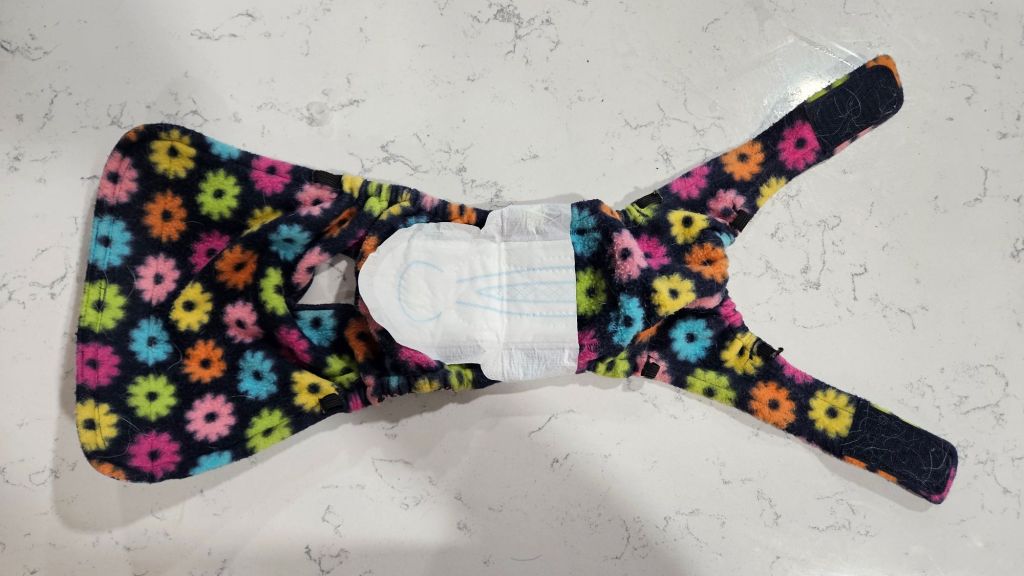
- Cloth diapers + pads. I recommend keeping two or three washable dog panties sized for your girl on hand. Inside the diaper, I use disposable women’s pads or pantyliners, depending on the flow. I change out the pad every few hours, or whenever I remove the diaper. If the pad is fully saturated, I adjust the thickness or frequency of changes. Remember, the goal is to keep her as clean and dry as possible! See below for an image of this setup.
- Every day or two, I use a dog-safe or baby-safe wet wipe to clean around the vulva and any blood on her legs or tail. A comb helps remove dried blood and keeps the fluff tangle-free. If things get really heavy, you can always throw her in the bath and get a good deep clean. Always dry the area well before putting a diaper back on.
- Don’t forget her emotional and mental fulfillment! Since our normal off-leash hikes, training classes, and competitions pause during this time, I make sure Iris still gets plenty of attention and stimulation in other ways. That includes:
- Food puzzles and chews
- One-on-one training games
- Longer, leashed sniffy walks
- Backyard sunbathing sessions
- & Extra snuggles 🙂
In a way, her cycle is an opportunity for us to slow down and bond in quieter ways.
Final Thoughts
Yes, managing a female dog in season can be inconvenient, but it’s far from unmanageable. With a little planning, management, and perspective, it becomes just another part of caring for your dog.
Whether you’re planning to breed or simply leaving your dog intact for health reasons, learning how to support her through her heat cycle is an act of respect and love. I hope some of my lessons learned from our experience with Iris gives you a helpful starting point.


 Meliora Drents
Leave a comment